Zitoona Mining
Zitoona Mining is structured to efficiently transition projects from licensing and development into production.
Investment Highlights
- Focus on high-potential mineral assets
- Operations in under-explored, high-growth jurisdictions
- Scalable resource base with phased development strategy
- Cost-efficient operational structure
- Multiple monetization and exit pathways
- Exploration and resource expansion
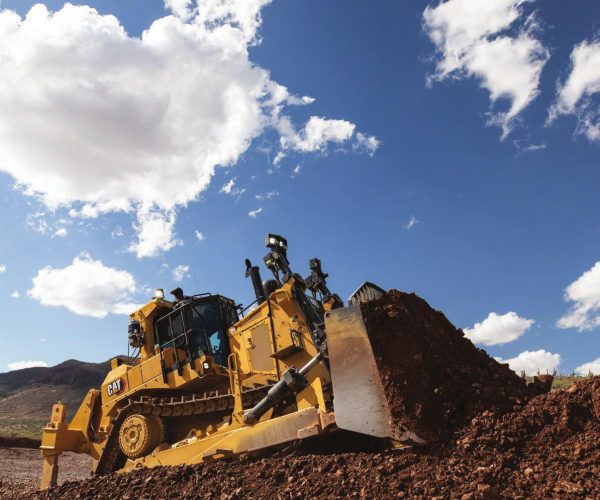
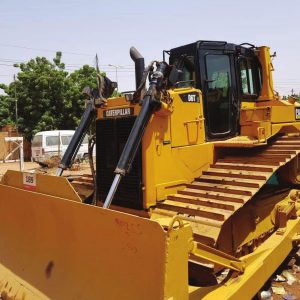
- Equipment and operational setup
- Regulatory compliance
- Production ramp-up and scaling
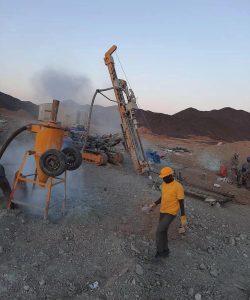
SATS Mining
SATS leverages deep operational expertise, regulatory knowledge, and disciplined capital deployment to build scalable businesses in high-growth and frontier markets.
Investment Highlights
- Proven execution capability in complex and emerging markets
- Diversified revenue streams reducing concentration risk
- Asset-backed business model with tangible operational assets
- Strong regional footprint across the UAE and Africa
- Scalable platform suitable for strategic partnerships and institutional capital

SATS Chemical Analysis Laboratory
SATS Chemical Analysis Laboratory is a well-established laboratory in Sudan, recognized locally for its long-standing track record in commercial and chemical analysis services. The laboratory has built a strong reputation based on technical excellence, reliability, and trusted results across both public and private sectors.
The laboratory is supported by highly experienced technical professionals, a solid and existing client base, and valuable tangible assets, including advanced analytical equipment and built-up laboratory facilities that are suitable for rehabilitation, expansion, and strategic utilization.
In light of current market conditions and the growing opportunities for reconstruction and development, SATS is presenting this initiative to explore smart strategic partnerships aimed at:
Rehabilitating and relaunching the laboratory to international technical standards. Expanding and upgrading analytical testing
services.
Maximizing the utilization of existing infrastructure and equipment. Delivering sustainable and attractive returns for all partners.
This partnership represents a compelling investment opportunity to participate in a ready-to-scale project, backed by proven expertise, established market demand, and a clear vision to restore the laboratory to a leading position within Sudan’s chemical analysis sector.
Introduction
Plastic bags containing a 337 kg sample from zitoona mining company Co. Ltd was delivered to SATS MINING LABORATORIES on 29 Jan, 2023. A test program was completed to assess the amenability of the Composite sample to Processing. Preliminary bottle roll leach tests and column leach tests were conducted on zitoona Mining Company Co. Ltd Composite sample, this report presents the Laboratories results obtained from bottle roll leach testing conducted at. Minus 19 mm, 9.5 mm, 4.75 mm and 75 µm Open cycle column leach testing conducted at 80 to 90 percent passing minus 37 mm, 19 mm and minus 9.5 mm crush size for Composite sample
.The procedures used for the test program as well as assay and detailed test data are appended to this report.
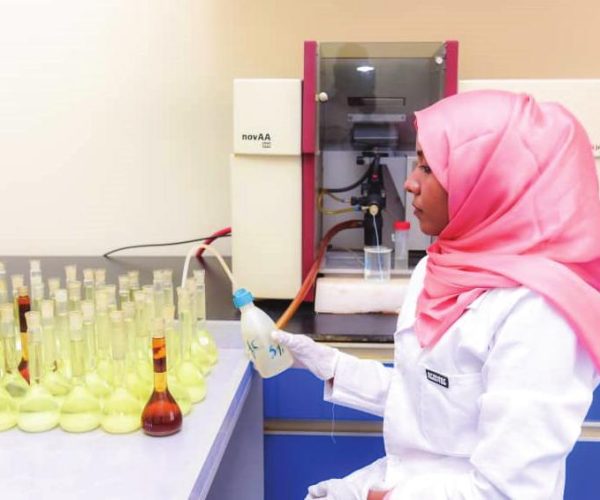
Sample Preparation
On 29 Jan, 2023, SATS MINING LABORATORIES received 7 large bags containing samples of material from zitoona Mining Company Co. Ltd. All seven bagged samples were combined the weight of all sample was 337 kg as is Crush Size Composite sample blended and divided Using Coning and Quartering Method to four group present in the following:
7 .23 Kg head Grade.
1.75 kg for Screen analysis.
29.68 for Bottle Roll Test.
195.1 kg for Column leach test.
100.0 kg Stock.
Head Assays for Composite Sample
A representative 2.0 – 3.0 Kg Portion of zitoona mining composite sample was blended and divided by Splitter riffling to take duplicate samples (A and B). The duplicate samples together with block 68C individuals were pulverized and analyzed for Au, Ag, Cu & Zn tenors usmg AAS machine. The results are presented in Table (1) below.
Gold head assays of ZMC-1 & ZMC-2 samples show variant grade compare to the rest of samples. Again variation within duplicates and between the average grade obtained from the individual samples(1.18) ,these variations are possibly due to nugget effect or heterogeneity of the ore.
Size/Assay Analysis of Composite Sample
A 17500 portion grams ZMC mining Co. Ltd block 68C, Composite sample was screened to 4.75 mm and the size fractions were assayed to determine the distribution of gold with size.
The sieve analysis demonstrates that, more than three quarters of the gold (82 %) is distributed within the oversize fraction of+ 9.5 mm, and only few amount achieving 18 % of the total gold is confined to fine fractions. Hence, if we crush down to – 9.5 mm we can free most of the contained gold to enhance good cyanidation.
Bulk Density, Specific Gravity, Natural PH and Moisture Tailing Density Determination was conducted on a representative ZMC composite sample of Zitoona mining Company Ltd the results are given below in Tables (3).
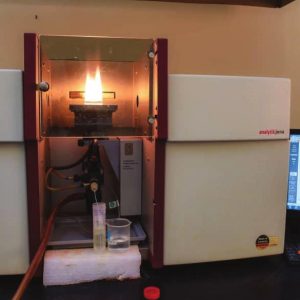
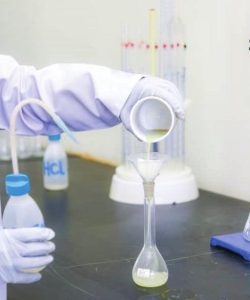
The objective of this test program was to determine potential amenability of Sample to generate gold extraction by cyanide. The procedure followed in the conduct of these tests was as follows: A 530g A 536-gram portion of pulverized material (minus 200 mesh) was placed into a 2.5-liter bottle and the material was pulped with 800 milliliters of tap water to achieve 40% solids. The pulp was mixed thoroughly and the pH taken and adjusted to pH (10 -11) with caustic soda before addition of cyanide. Leaching solution containing 1.0 gram per liter sodium cyanide, was added to the alkaline pulp. The pulp was rolled in open bottles on the laboratory roll for 48 hours. Rolling is suspended briefly to allow pregnant solution sampling at 2, 8, 24, and 48 hrs to establish the recovery rate. The volume of solution withdrawn is measured and a sample is taken for precious metal analysis by AAS. The pH and cyanide concentration are determined for each pregnant solution sample. Make-up water, equivalent to that withdrawn, is added to the pulp. The pH and cyanide concentration are restored to the initial value. Rolling is then resumed.
After completion of the leach period, the slurry was filtered, washed and the final tailings were split in half. The two splits were submitted for gold analysis.
Overall gold extraction 91.3 %. for the standard agitation leach tests ZMC for Zitoona Mining Company Ltd- Composite Sample. Sodium cyanide consumption for the standard agitation leach tests ranged from 0.20 to 0.47 kilograms Na CN metric tons of ore. caustic soda consumption for the tests ranged from 0.49 to 0.99 kg per ton of ore.
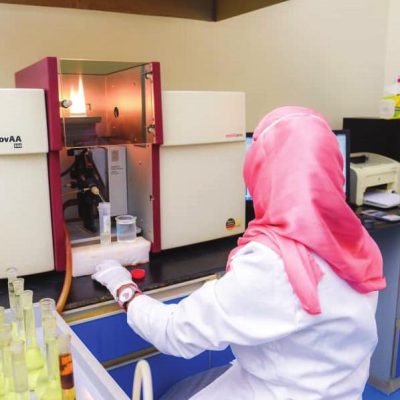
A series of bottle roll leach tests was performed on three coarsely crushed fractions of the ZMC composite samples, namely 19.0 mm, 12.5 mm and 6.3 mm. These course crushed samples were subjected to Roll Bottle using similar standard procedure mentioned above. The gold recovery rate attained 68.42%, 81.05% and 85.83 %. For 19.0 mm, 12.5 mm and 6.3 mm respectively. The results for these Roll Bottle Tests for coarsely Crushed Samples are tabulated below (Table 5.0).
It worth mentioning that, the pulverized samples recovery attained 91.3 % with considerable cyanide consumption in the stander range (0.7 kilograms/t)while the coarse fraction of 12.5 mm demonstrates a recovery of 81 % with cyanide consumption in the stander range(0.5 k) .
Submersion (Green Strength) Test Stability (Jigging) Test
Percolation Test for ZMC Composite Sample Open Cycle Column Leach Study Minus 25 mm. Open Cycle Column Leach Study Minus 12.5 mm. Open Cycle Column Leach Study Minus 6.3 mm. Vat leach test Minus 12.5 mm.
Vat leach test Minus 6.3 mm. Vat leach test Minus 2 mm
Open Cycle Column Leaching Test
The open cycle column leach tests were conducted to evaluate the static Cyanide Leaching characteristics (Heap & Vat) at different crush sizes. The tests were conducted at 80 to 85 percent passing 25 mm, 12.5 mm and 6.3 mm crush size.
Prior to column leaching, the sample was subjected to agglomeration tests to assess the requirement of a precondition ore agglomeration.
A composite of ZMC samples was crushed to 12.5 mm sizes, and agglomerated with different quantities of cement binder (2.0, 5.0, 7.0 and 10.0 kg cement /Mt ore) to optimize cement demanded, moisture required, curing time and maximum flow rate application together with test for agglomerate strength and stability.
Stability (Jigging)Test
The agglomerate stability was determined by jigging cured agglomerates (from the above tested portions). A 500 sample of each portion was placed into a 10 mesh screen and jigged in and out of a container of waterl 0 times in a 30 seconds period. Agglomerates retained on the screen 10 mesh are dried and weighed the results are given below in Tables-5.0 & graphically in figure 2.
The agglomerate stability of the rate 10 kg/t cement is the best stability, but if the financial impact is not justifying this selection, the 7 kg/t could be retained as optimal rate.
Submersion (Green Strength) Test
Agglomerated charges are placed into sealed containers and cured for 72 hr. After curing time each Agglomerated are submerged in separate beakers of water. The degree of agglomerate Degradation is measured over time 24 hr.
Natural Percolation Rate Test Work
Percolation test was conducted on a typical previously agglomerated sample crushed to 12.5 mm sizes. The tests were carried out on the ore without cement, while the other two were agglomerated with different amount of cements. Test charges from the agglomerated ZMC Composite Sample were prepared and loaded into 4 inch diameter Plexiglas columns to a height of approximately 0.75 meters by Curing Time was 72 hr.
Percolation is considered optimum when a discharge liquor flow rate of higher than 60 liters per hour is achieved with slump rate less than 10 %. At 10 kg/t cement a maximum percolation rate will be attained ( FR=324 L/H & Slump rate of 4.1). But still for budget reason, 7 kg/t added cement with flow of 211 liter per hour was achieved and the slump rate was found to be 4.8 %. The jig and submersion tests resulted in clean solution without degradation. Therefore, the agglomeration tests proved that, at 7 kg/t of cement an optimal agglomeration parameters could be achieved and this rate was selected for the Open Cycle Column Test
Bulk Laboratory Open Cycle Column Leach Test work
Bulk column cyanidation leach test work was conducted on three sizes of agglomerated ZMC Composite Sample (+25, +12.5 mm & +6.3 mm fractions,). The tests are run in standard Plexiglas columns in varying diameters. From each ZMC composite size a (16 – 40 kg) was subjected to bulk column cyanidation leach test work in accordance with the following test procedure.
This column tests again confirm that the fraction+ 12.5 % can provide a reasonable recover rate (74 – 77 %) with reasonable cyanide consumption. The test result of the less coarse fraction of
6.3 mm shows slight improvement in recovery rate of gold not more than 5 % higher which might not justify the down crushing expenses.
The sieve analysis demonstrates that, more than three quarters of the gold (82 %) is distributed within the oversize fraction of+ 19 mm. Hence, crushing down to size of 12.5 mm could granted good liberation of gold bearing oversize fraction.
the bottle tests for pulverized samples extract about 91.3 % with cyanide consumption (0.9 kilograms/t), while the coarse fraction of 12.5 mm demonstrates a recovery of 81 % with cyanide consumption in the stander range(0.6k/t) .
The column tests again confirm that the ore can be treated with heap leach method. Fractions, minus 12.5 % can provide a reasonable recover rate (74 %) with low cyanide consumption.
In contrast to that, the column for Vat Leaching showed recovery rate of 77 % for the same fraction (-12.5 mm), and 79 % when using -2 mm fraction, possibly due to reduced leaching time (72 hours). Extended leaching duration could possibly improve recovery rate for Vat Extraction.
Based on these preliminary results, we recommend Vat Leaching technique using a size of – 12.5 mm. if the financial evaluation directs the company towards the right decision.